Unfortunately, the worries and problems travelers may encounter in southern countries are most often connected with the very things that attract us there: bright sunshine, a warm sea filled with various marine creatures, and delicious but unfamiliar food, including seafood and exotic fruits… What medicines should you take on vacation to keep these problems from spoiling your trip?
Of course, every tourist destination has plenty of pharmacies where you can buy any medicines you may need. Medicines in countries such as Egypt, India, Sri Lanka, Thailand, and the Philippines are not very expensive and fully comply with international standards. Pharmacies stock both medicines with familiar names and their equivalents.
In addition, every large hotel has an emergency medical facility. But every traveler who loves exotic destinations should have a travel first aid kit!
Sun protection
Tropical and equatorial countries are located at latitudes where the angle of the sun’s rays differs from what we are used to. This creates a risk of sunburn, which can occur faster than you might expect, as well as heatstroke or an allergic reaction to ultraviolet radiation.
Buying a good sunscreen with an SPF suitable for your skin type is not a problem. It does not really matter whether you bring it with you or buy it immediately after arrival, but sunscreen should be the first item in your travel first aid kit. For children or fair-skinned adults, the SPF should be at least 20, while for small children with very sensitive skin it should be as high as 40–50.
Don’t forget a hat and good sunglasses. Although they have little to do with a first aid kit, they are directly related to your health.
An allergic reaction to the sun — photodermatosis, or “solar urticaria,” is also possible. It can be triggered by certain medications, such as sulfonamides, tetracyclines, fluoroquinolones, antidiabetic or diuretic drugs, and nonsteroidal anti-inflammatory drugs. Therefore, whenever possible, a “tropical first aid kit” should not contain photosensitizing medications, while your cosmetic kit for a trip south should not include products containing bergamot or citrus oils, for example. In general, it is better to use as little decorative cosmetics and perfume as possible — or even avoid them altogether during the trip.
Just in case, for local protection against possible sun allergies and the effects of sunburn, include lanolin or zinc paste (photoprotective creams) in your first aid kit, as well as Methyluracil ointment with Miramistin and Panthenol. Remember that for internal use in treating the effects of sun allergies, you may need vitamins E and PP, Aevit, and Methionine.
Protection against injuries caused by marine life
Burns caused by jellyfish or sea anemones should be treated quickly with a solution of vinegar or alcohol, which neutralizes the venomous stinging cells.
Some toxins can cause a severe allergic or painful reaction, so after any burn, sting, or bite in the sea, you should immediately get out of the water and consult a doctor at the nearest hotel on the coast. The doctor will give you a painkiller, treat the wound with an antiseptic and, if necessary, apply a compression bandage or give you the required vaccination. If further treatment is needed, a voucher from your insurance policy will be used.
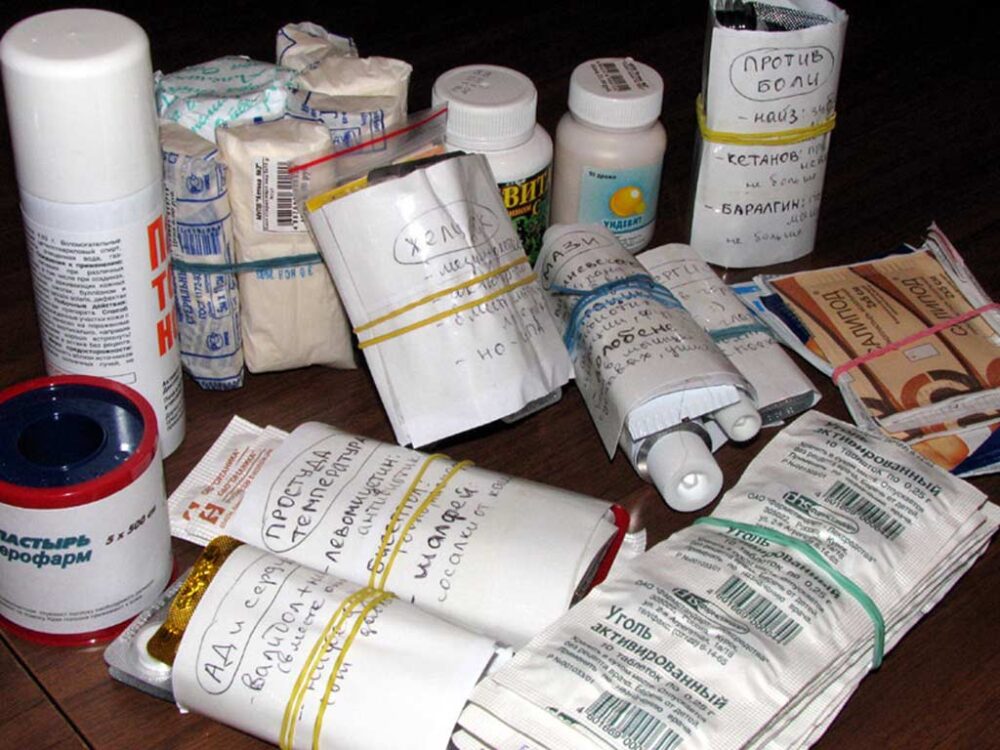
However, you may have to provide first aid yourself, either to yourself or someone close to you. Your first aid kit should therefore contain:
- disinfectants (alcohol, brilliant green solution, or hydrogen peroxide),
- bandages and adhesive plasters,
- painkillers (Analgin, ibuprofen, or Ketanov),
- an anti-inflammatory pain-relieving ointment with antimicrobial properties containing an antibiotic, such as Levomekol,
- antihistamines to relieve allergic reactions caused by marine animal toxins — Clemastine (Tavegil), Loratadine (Claritin), Cetirizine (Zyrtec), or Fenistil Gel.
Protection against food poisoning
The sea and sun are the main sources of both wonderful experiences and potential dangers for independent travelers in exotic countries. Water and food come second among the possible problems.
When arriving in Egypt, India, Sri Lanka, or another southern country, never drink unboiled tap water! Even when brushing your teeth, it is recommended to use bottled water. As an alternative to purchased water, you can boil water — for which you will need a kettle — or disinfect drinking water using sterilizing tablets.
Remember: don’t try to save money on water, otherwise you risk spending your vacation close to the bathroom in your hotel or guesthouse room! Any fruit and vegetables you buy should be washed thoroughly using bottled or boiled water.
During acclimatization, don’t forget that exotic food may be unfamiliar to your body. Follow hygiene rules carefully, wash your hands before eating, and always carry disinfectant wipes or liquid with you.
There is an opinion that alcohol helps disinfect food. Instead, however, you can use lemon or hot spices, which are an essential part of many exotic dishes. If trouble cannot be avoided and you suffer food poisoning accompanied by vomiting or diarrhea, your first aid kit should contain medicines such as activated charcoal or Enterosgel, Loperamide or Imodium (use with caution: contraindicated for children and pregnant women!).
If digestive problems are caused by overeating or food that has aggravated chronic conditions of the stomach, liver, or pancreas, Maalox, Festal or Panzinorm, and No-Spa can help. And, of course, moderation in food and avoiding alcohol.
How to avoid problems while traveling
Independent travelers often have to spend a lot of time in transport. This usually means long flights, bus journeys, and sea trips. All of these can cause unpleasant sensations in people with a sensitive or untrained vestibular system.
To prevent motion sickness, a travel first aid kit should contain medicines that help with seasickness, such as Avia-More, Aeron, menthol drops, or Dramamine.
To prevent swelling of the limbs caused by sitting for long periods, heat, or increased fluid intake, you can take Hypothiazide (diuretic tablets) or Lioton ointment for topical use. Just remember that taking diuretics can temporarily cause the blood to thicken. They should therefore be used with caution, especially if there is a risk of thrombosis, such as in older people or those with varicose veins. For this reason, it is better to combine diuretics with medicines that prevent blood clots, such as “Thrombo ASS.”
Protection against colds
We usually associate colds with autumn rain or winter frost, but in fact there is also a risk of acute respiratory infections during summer. This is especially true when the body becomes more vulnerable because of a sudden change in climate and time zones. Air conditioning can also contribute to these illnesses.
To deal with the most common cold symptoms, such as a runny nose, cough, and others, the following remedies may be useful: nasal drops: Naphthyzin, Galazolin, or Sanorin (remember that nasal vasoconstrictors should only be used for 3–4 consecutive days); ear drops: Otinum, Otipax, or Anauran; oxolinic ointment; aspirin or paracetamol, Arbidol, Grippferon, Strepsils, Coldrex, or similar remedies. It is also useful to have a thermometer in your first aid kit, but not a mercury one. Remember that a high temperature can be reduced not only with medication, but also by wiping the body with a weak vinegar solution (one tablespoon of vinegar per half liter of water).
Finally, for protection against possible bacterial eye infections or conjunctivitis, you can take Tobrex eye drops (approved for use even in very young children) or Ciloxan. If you are prone to allergic eye reactions such as itching, swelling, or tearing, Opatanol or Alomide can help.
If you have chronic conditions, don’t forget to take a sufficient supply of the medicines prescribed by your doctor to avoid flare-ups during your vacation.
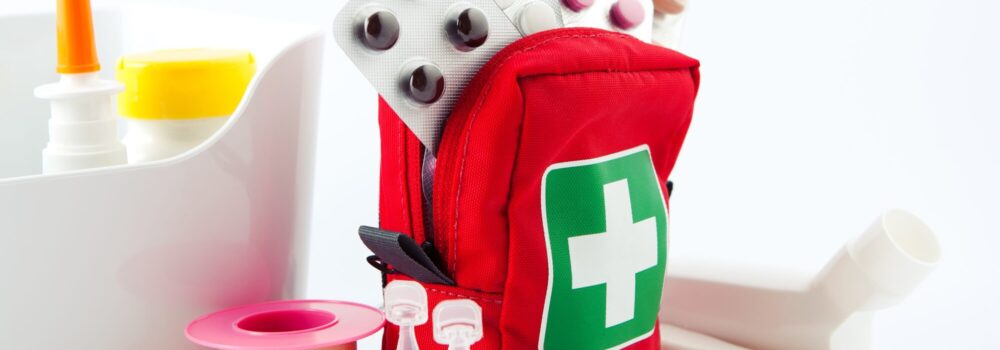
Now let’s put everything mentioned above together and create a “tropical travel first aid kit”!
List of medicines for a travel first aid kit
- Sunscreen with an SPF suitable for your skin type.
- Lanolin, zinc paste.
- Methyluracil ointment with Miramistin or Panthenol.
- Vitamins E and PP, Aevit, Methionine.
- Ethyl alcohol, brilliant green solution, hydrogen peroxide.
- Analgin, ibuprofen, or Ketanov.
- Bandages, adhesive plasters.
- Levomekol ointment.
- Clemastine (Tavegil), Loratadine (Claritin), or Cetirizine (Zyrtec).
- Fenistil Gel.
- Disinfectant wipes or liquid.
- Activated charcoal or Enterosgel; Loperamide or Imodium.
- Maalox; Festal or Panzinorm, No-Spa.
- Avia-More, Aeron, menthol drops, or Dramamine.
- Naphthyzin, Galazolin, or Sanorin.
- Otinum, Otipax, or Anauran.
- Oxolinic ointment.
- Aspirin or paracetamol.
- Arbidol or Grippferon, Strepsils, Coldrex.
- Tobrex or Ciloxan.
- Opatanol or Alomide.
But remember the most important thing: healthcare in the countries you are traveling to is often at a level no lower — and sometimes higher — than the standard of medical care in our own country.
If you feel unwell, it is better not to self-medicate but to consult a doctor.
Therefore, before your trip, don’t forget to take out medical insurance, which can help you deal with possible illness or injury while abroad.