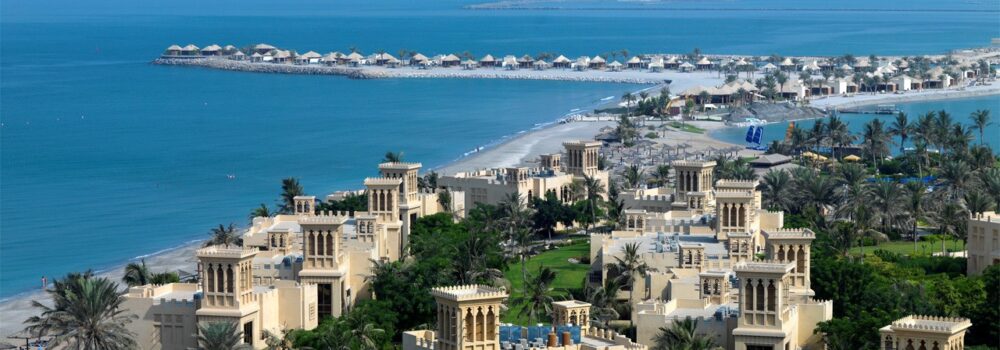
When people talk about the UAE, they most often mention the capital Abu Dhabi, as well as Dubai and Sharjah. All these cities — on the scale of the country they can even be called megacities, as Dubai has a population of just over 2.2 million people — are located in the largest emirates by area and are the most popular among tourists. The main type of holiday here is the “vegetable” kind (sorry, the beach kind), along with shopping — shopping tours are still relevant, although exchange rates may have made them somewhat less popular than they were a few years ago. Our holidaymakers know much less about another emirate — Ras Al Khaimah. I am convinced that it is completely unfairly overlooked. And here’s why.
“And I’m going, I’m going after the fog…”
After arriving at Sharjah Airport, the group quickly collected their luggage and boarded two minibuses to reach their destination — the artificial Al Marjan archipelago. “We’ll be there in 45 minutes,” our drivers promised with a slight accent that sounded Pakistani. And they would have been right — under normal circumstances, this pearl of Ras Al Khaimah can be reached even faster, if it were not for… the fog.
It suddenly covered the highway as if wrapping it in a slightly worn cotton blanket. Fast but careful local motorists, as if on command, switched on their hazard lights and reduced their speed from 120–130 kilometers per hour first to 20 and then to 5. Our driver did his best to cope: he opened the window and seemed to be trying to disperse the clouds of fog with his hand — although it is unlikely that he had heard similar advice in an Irina Allegrova song. Despite his efforts, we clearly left the road a couple of times, but fortunately never had an accident.
On the other hand, traveling at extremely low speed gave us a chance to see groups of local residents on the sandy dunes beside the road, dressed in snow-white kanduras — ankle-length garments — who had come out for a picnic with friends and numerous family members. All in all, it was a curious mixture of “Silent Hill” and an Arabian fairy tale.
Imported sand
This adventure, however, did nothing to prevent us from fully enjoying everything Ras Al Khaimah has to offer. Clear sea, clean beaches, and gentle sunshine — unless, of course, you decide to come here in summer, when temperatures exceed 50 degrees and locals seek refuge in air-conditioned shopping malls. What more could you need?
But the emirate is not limited to these traditional forms of southern relaxation or various water activities, whether jet skiing or a simple banana boat ride. While visiting its capital, also called Ras Al Khaimah, it is difficult to resist a trip to the local market in the Old Town.
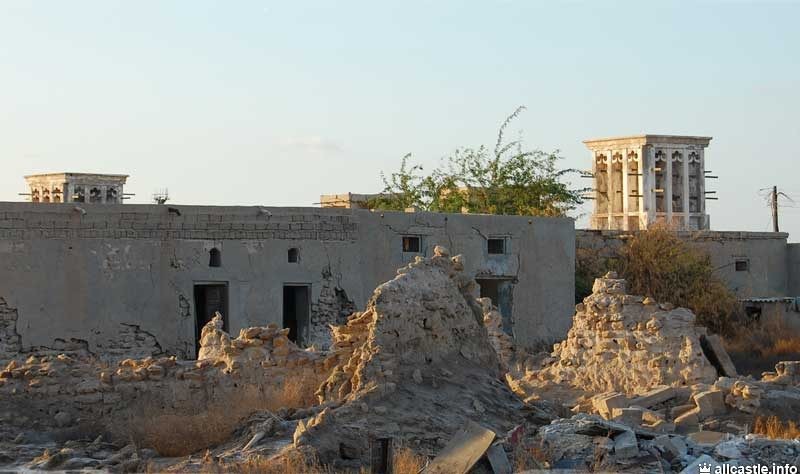
The emirate’s main historical attraction — there are around two dozen in total — is considered to be Dhayah Fort, built in the 16th century. The ghost town of Jazirat Al Hamra is also impressive: at the end of the last century, all its residents moved to larger cities, leaving behind only single-story houses made of coral stone, which half a century later are already partly ruined. The workers we encountered there were apparently restoring the buildings and looked as surprised as if they had seen visitors from the spirit world.
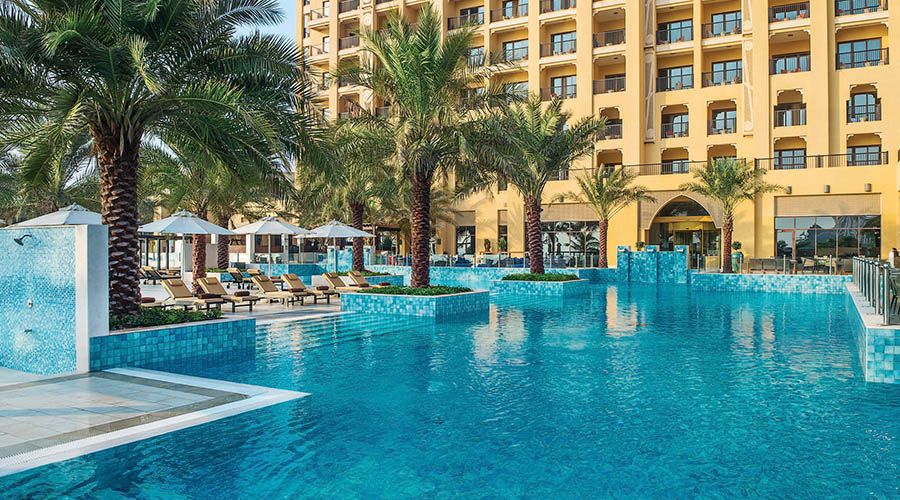
Speaking of beaches: all seven emirates of the UAE, even those without access to the sea, are convinced that their sand is unique. And those looking for something truly exotic can be advised to visit the beach of the five-star DoubleTree by Hilton on Al Marjan — its snow-white sand is brought in every six months… from Malaysia! Such a delivery costs three million dollars. And they say beauty cannot be bought at any price…
Hotels here, meanwhile, range from one to five stars, so everyone can find a roof over their head to suit their taste and budget.
Up into the mountains
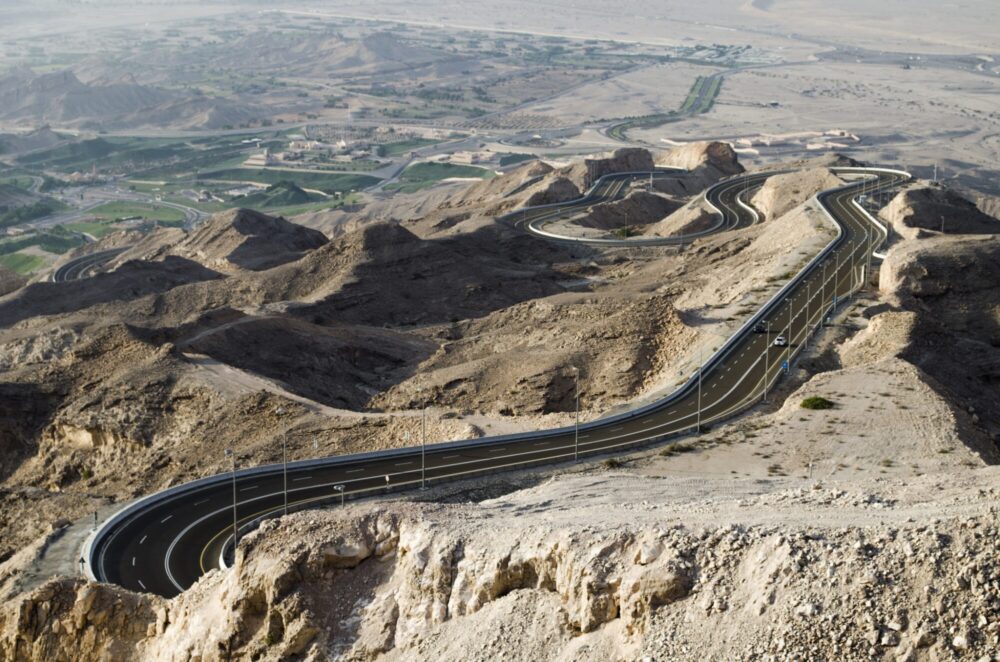
Ras Al Khaimah also offers unique opportunities for active recreation. At the end of November this year, a via ferrata opened in the area of Jebel Jais — the highest peak in the UAE at 1,934 meters. It is a rocky route equipped with cables and steps that can be crossed using climbing equipment. Sections of the route are connected by three zip lines, the longest of which is 300 meters. Training is provided by experienced climbers from India and the United Kingdom.
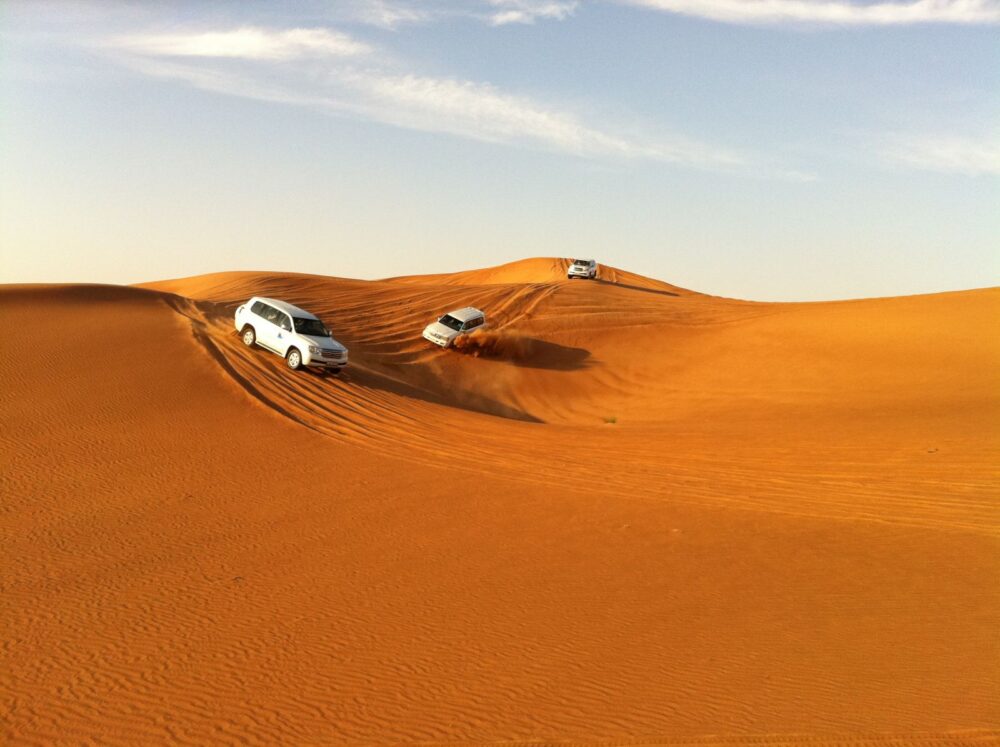
Thrill seekers can also try a jeep safari. Usually, a convoy of around a dozen powerful off-road vehicles is formed — modern ships of the desert bearing the names of Japanese or American brands. On our trip, we got a white Toyota Land Cruiser, like most cars in the UAE. Cruising across the desert dunes in it is pure excitement!
And the pauses between the roar of the engine, sliding down one steep dune or jumping onto the crest of another, can — and should — be filled by contemplating the sunset. In the desert, it is a sight worth seeing.
Food and entertainment
There is no shortage of entertainment in Ras Al Khaimah. And there are certainly no problems with food either — from simple cafés and shawarma shops to sophisticated dishes in top hotels prepared by chefs who have earned Michelin stars.
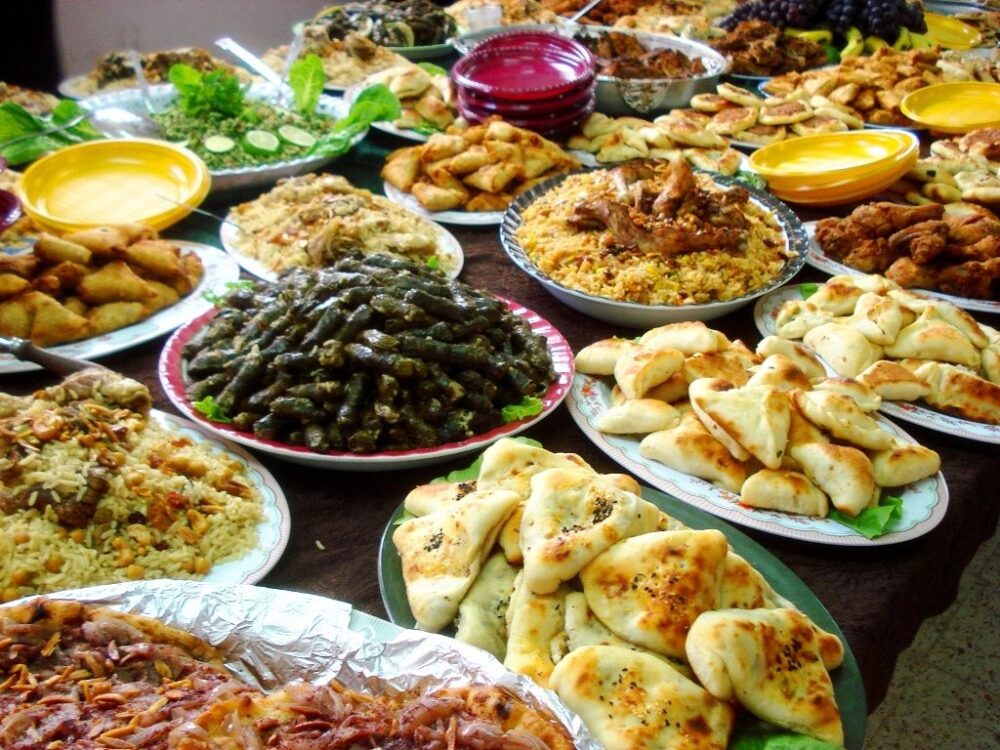
At the same DoubleTree on Al Marjan, for example, there are 12 bars and restaurants, including Italian and French cuisine, with two more currently under construction. Those who cannot leave the country without trying the local cuisine can visit Al Fanar restaurant — branches of this small chain can be found not only in Ras Al Khaimah but also in Dubai, Abu Dhabi, and Al Ain.
Be prepared for the portions to be quite impressive. It is not about trying to stuff guests with food — it is simply believed that if a guest leaves behind a clean plate, the host has failed to satisfy their hunger. So, just in case, food is served generously.
Al Fanar offers many dishes not only with poultry and meat but also with seafood, which is hardly surprising given that the fish market is not far away. For dessert, alongside a cup of strong Arabic coffee, try mini doughnuts called luqaimat and camel-milk ice cream — date or saffron flavored, for example. As Soviet entertainer Arkady Raikin used to say, “the taste is… specific!”
As for entertainment, another exciting adventure is a trip to the camel races. Their dates and times are generally not officially announced in advance, but traditionally the competitions are held on weekends — Fridays and Saturdays.
Shortly before a race, an interesting scene can be seen around the track: the camel owner’s expensive SUV slowly moves along the road, towing the future competitor on a rope. Incidentally, children who traditionally served as jockeys in these competitions are no longer seen in the UAE. Because of the dangers of the profession, lightweight but underage riders were banned from participating in races in the early 2000s. They were replaced by remote-controlled robots. It is a striking combination of centuries-old traditions and modern technology.
There are also plenty of shopping opportunities in the emirate. There may be no gigantic shopping centers like those in Dubai, but four malls are quite enough to satisfy even demanding shoppers. And prices, according to those in the know, are 20–25% lower than in Dubai. At the same time, neither private shops nor markets display the kind of Egyptian-style persistence some travelers may be familiar with — apparently, the merchants value their dignity more than potential profit. Bargaining, of course, is not only possible but necessary — otherwise you simply will not be understood.
“Alcohol openness”
Unfortunately, neither the beauty of the mountains, the greenery of the oases, nor the sound of the surf — and Ras Al Khaimah has plenty of all three — can stop some of our tourists from wanting to accompany their holiday with alcoholic drinks. In the UAE, as in many other Muslim countries, attitudes toward alcohol are generally negative. In conservative emirates with strict anti-alcohol rules, appearing drunk in public can result in imprisonment or a substantial fine.
Ras Al Khaimah, however, has decided to keep up with the times and significantly ease restrictions for the benefit of European travelers. Suffice it to say that foreigners here can freely purchase alcohol even during Ramadan — the Muslim holy month of fasting — and not only on hotel premises.